 Your Black Bloggers The official gathering spot for black bloggers
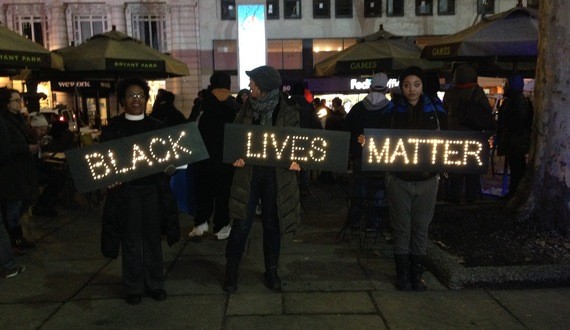


Recently the New York Times published the latest in its series of sub-par articles on the current racial justice movement. Like its predecessors, this installment, “Protesters Out to Reclaim King’s Legacy, but in Era That Defies Comparison,” by Tanzina Vega, dutifully reinforces conventional wisdom that does not stand up to challenge. It is important to inspect the badly inaccurate depictions and deep misunderstandings that infect the Times‘ coverage.
1. This Movement Lacks Leadership and Goals
Historian David J. Garrow tells Vega that the current movement bears little resemblance to the “clear goals” of the 1960s civil rights movement. “You could call it rebellious,” he suggests, “or you could call it irrational.” In this dismissal, he echoes Oprah Winfrey’s similarly condescending remarks calling for the movement to develop “leadership,” remarks Vega also saw fit to highlight.
These claims are obviously erroneous: a spate of new organizations boasts strong young leadership. Vega and Garrow ought to Google Charlene Carruthers of BYP100, Alicia Garza of #BlackLivesMatter, Dante Barry of Million Hoodies, Ferguson activist Ashley Yates, and Maurice Mitchell who dropped everything to help in New York, and when they’re done, come back for another such list. If these young activists are learning from the problems of overly centralized leadership of the past and seeking to distribute and share leadership more broadly, all the better, even if it earns them the scorn of the New York Times.
